The Golden Slipper
This is the story of Orkney’s famous night-club, the Golden Slipper, and its host, Willie Farquhar. How did a boot-repairer become one of the best known men in Orkney?

Orkney Tour designed for you by an Orcadian
Patricia Long grew up in Orkney and can trace her ancestry back to the Norse Earls.
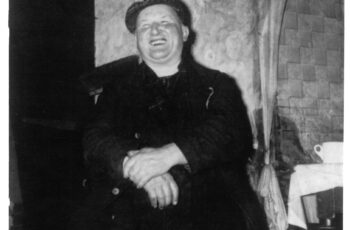
This is the story of Orkney’s famous night-club, the Golden Slipper, and its host, Willie Farquhar. How did a boot-repairer become one of the best known men in Orkney?
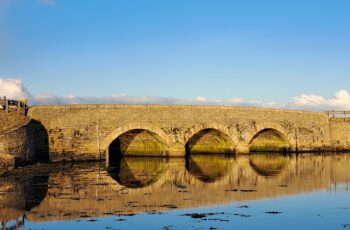
The most important bridge in Orkney is at Waithe, where the Stenness loch meets the sea. This is the story of bridges old and new and the neighbouring ale-house.
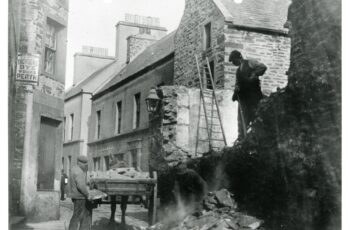
Graham Place in the oldest part of Stromness and probably has enough history for a whole book. This is one small part of that story – how the narrowest part of the main street became a space large enough for my mother and her friends to play rounders in.
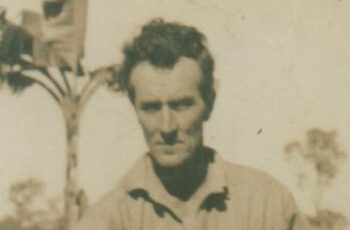
William Leask from Stenness was wounded and taken prisoner at the Battle of Loos in 1915. Three years later, he crossed the border into Holland on his fifth escape attempt, having learned the day before that the war had ended. His remarkable and detailed account of his experiences was serialised in the Orcadian in 1936.
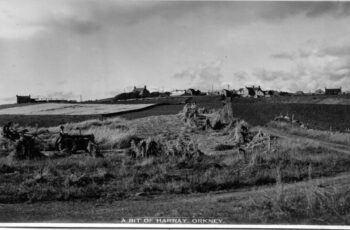
In 1950, the parishes and islands of Orkney were described for the Third Statistical Account of Scotland. The accounts were published in a book in 1983 and this description of Harray by Charles Borwick is full of interesting detail and pleasure in the progress being made in Orkney at the time.
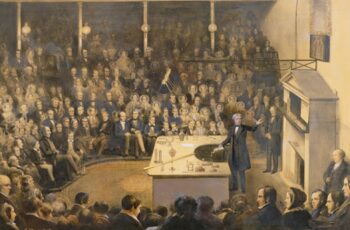
Thomas Webster is one of the many Orcadians who played a small but significant part in the creation of the modern world. In his varied career he designed the lecture theatre of the Royal Institution, was the first professional geologist and wrote an Encyclopedia of Domestic Economy.
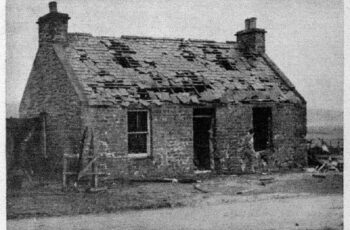
Stenness suffered the worst effects of the bombing raid on 16 March 1940 but was not the only part of Orkney to be attacked.
Sailors died on HMS Norfolk in Scapa Flow and there were narrow escapes at Craigiefield outside Kirkwall and Holm and Orphir.
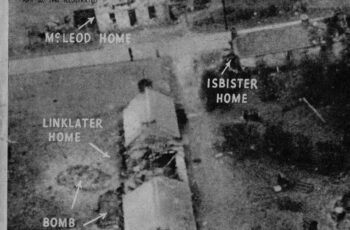
The first serious air-raid of WWII was in Orkney and resulted in the death of 27-year-old James Isbister at Bridge of Waithe, Stenness.
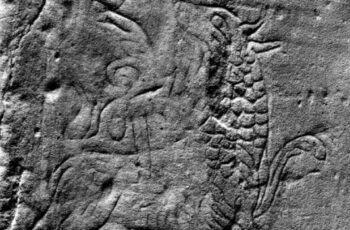
Maeshowe has been astonishing visitors since 1861. It is the finest chambered tomb in north-west Europe and its walls are covered in Norse graffiti.
This picture of the famous dragon was taken by my grandfather about 1935. This is the story of the cairn from a very local perspective.
In 1941, author and Army Captain Eric Linklater was asked to write about the Army garrisons in the Faroes and Iceland. It has been described as the kind of writing that gives propaganda a good name and this description of being in a North Atlantic convoy bears that out.
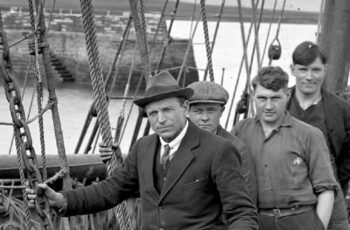
Frank Worsley, captain of Shackleton’s ship Endurance, navigated the small ship’s boat 800 miles across the Southern Ocean.
He learned his trade from an Orcadian, Captain Robert Sutherland, whom he visited in 1921 Three years later, his ship, full of alcohol ran aground off Eday.
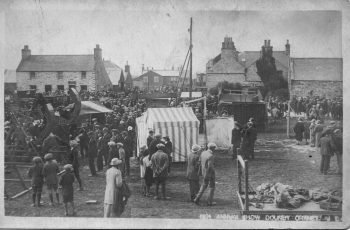
The Dounby Show is one of the highlights of the Orkney summer.
Since 1891, on the Thursday before the second Saturday in August, the best of the West Mainland’s cattle, horses and sheep have competed in the village that owes its existence to Orkney’s farming revolution.
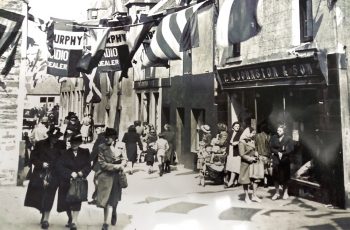
The first Stromness Shopping week was organised in only three weeks, by the newly-formed Stromness and West Mainland Chamber of Commerce.
The week was such a success that it has lasted for more than seventy years. This is a story of the first three years: of sports tournaments, pipe bands, parades, exhibitions and tortoises.
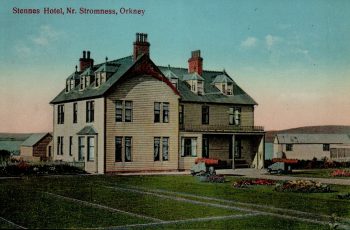
The first telephone line in Orkney ran between the Masons Arms Hotel in Stromness and the Standing Stones Hotel, which John Mackay established on the shores of the Stenness Loch in 1896. The hotel’s first fifty years saw more innovation, two World Wars and a prolonged battle with the Temperance Movement but it is still standing.
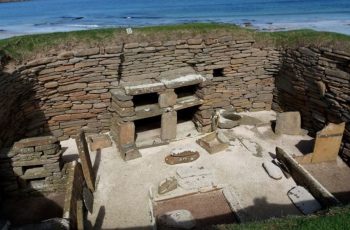
My investigation of the original reports, and the discovery of an article written by my grandfather, has revealed the forgotten man who discovered Skara Brae. William Watt, a respected scientist consulted by Hugh Miller, disappeared from the public record in 1930 but is now getting the recognition he deserves for his important excavation work
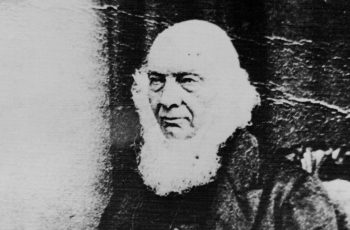
Rev Charles Clouston began Orkney’s weather record almost 200 years ago. The South Orkney Islands have the longest weather record in Antarctica, thanks to William Speirs Bruce, the grandson of another Orcadian, Charity Isbister.
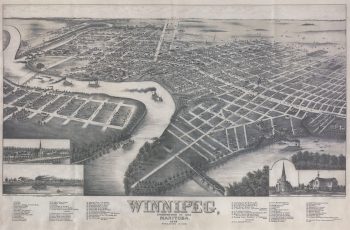
Some Orkney men stayed in Canada after they retired from the Hudson’s Bay Company and settled in the Red River Valley. They and their families played an important part in the birth of Winnipeg.
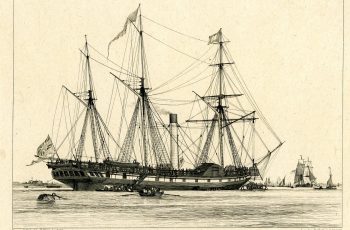
When the United Kingdom visited Stromness in 1826. Stromnessians flocked to see the huge steamship. The ship’s passengers were just as keen to see the town and three of them were just glad to be home again
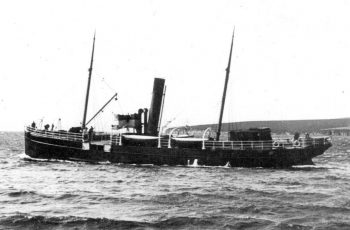
The Northlink ferry Hamnavoe now takes 90 minutes to carry us comfortably between Stromness and Scrabster but for 59 years, from 1892 to 1951, St Ola I was the only way to cross the Pentland Firth. She was only 135 feet long so it wasn’t always a comfortable trip but the dauntless little ship and her larger-than-life captains earned a special place in Orkney history.
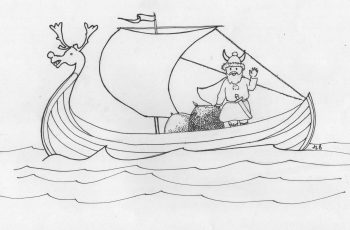
My sister Anne Brundle was curator of archaeology at the Orkney Museum and drew cartoons for their Christmas card. This is Viking Santa, who was very generous, but people worried about where he got the presents.
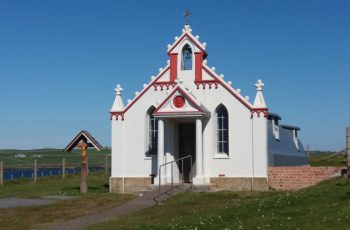
When the Italian PoWs left the island of Lambholm in Orkney in 1944, they must have assumed that their beautiful little chapel would be demolished with the rest of the camp. More than 70 years later, it is still here and this is the story of what happened after the Italians went home.
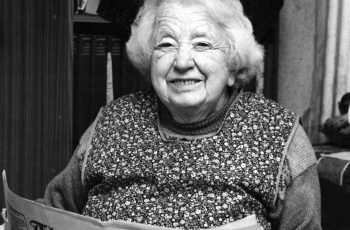
Hallowe’en is the time to gather around and tell ghost stories or to try to foretell the future. The first ghost story that I remember hearing was told by my grandmother, Johina Leith, nee Kirkness. When she was about nine years old, which would have been about 1908, she and her sister Mary were playing in a grassy ditch near the family home of Newhouse, Dounby…
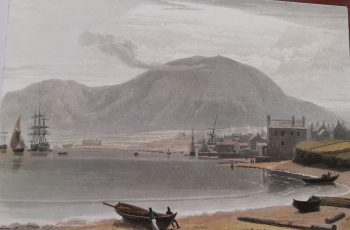
In 1700, Stromness was a village with five houses and a few scattered huts; ninety years later it had 222 houses.
When the Statistical Account of Scotland was published in the 1790s, Rev William Clouston’s entry for Stromness and Sandwick was one of the most detailed of them all.
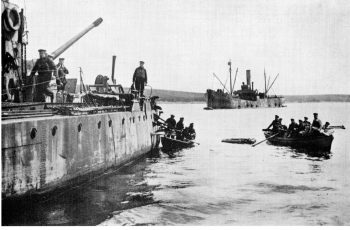
This is not another re-telling of the facts of what happened in Orkney on 21 June 1919; this is a collection of people’s memories of that day. They include Arthur Burnett, who literally couldn’t believe his eyes as the ships went down and Stromness schoolchildren on the small boat sailing through the greatest loss of shipping in a single day.
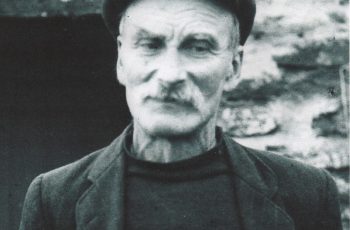
People now come across the world to dig at the Ness of Brodgar but my grandfather, Peter Leith, was almost eighty years ahead of them, arriving on site with his spade in 1925.
In February of that year, John Wishart of Brodgar Farm turned up some large stones when ploughing. He noticed unusual marks on one of them and told his neighbour Peter, who farmed Appiehouse, just across the loch. The hole he dug, under the impression he was excavating a small grave, is still visible inside Structure 8.
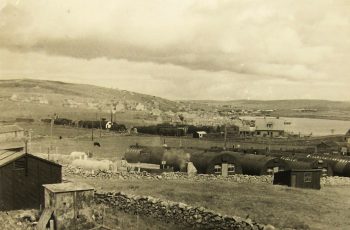
During WWII, the Stromness Hotel became the headquarters of OSDEF, the Orkney and Shetland Defence Forces, and Stromness became, effectively, an army town. My mother, Kathleen Leask, was just about to turn 11 when war broke out so I grew up hearing stories about it.
The Stromness Hotel has 42 bedrooms, so OSDEF at first only commandeered half of it. The other half continued to operate until, according to Mum, one of the guests was found to be a spy.
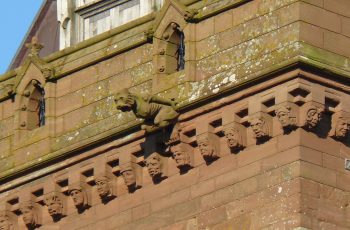
St Magnus Cathedral was founded in 1137, making it one of the two oldest cathedrals in Scotland, along with Glasgow. When the cathedral was restored 100 years ago, a few courses of stone were added to the tower but that wasn’t all. It was only about ten years ago that I noticed the faces around all four sides of the tower. They are young and old, men, women and animals. Of course, inside the cathedral there is far more to see and this post can only give a small sample.
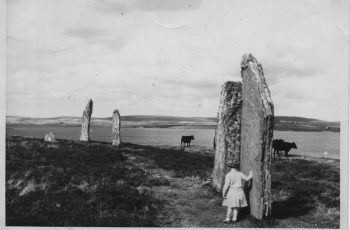
This picture must have been taken at the Ring of Brodgar about 1960, as I
would guess I am about three years old. I couldn’t have realised then how familiar the Ring would become. Since I became a tourist guide in 2013, almost all my tours include a walk around one of the best-known stone circles in the country.