
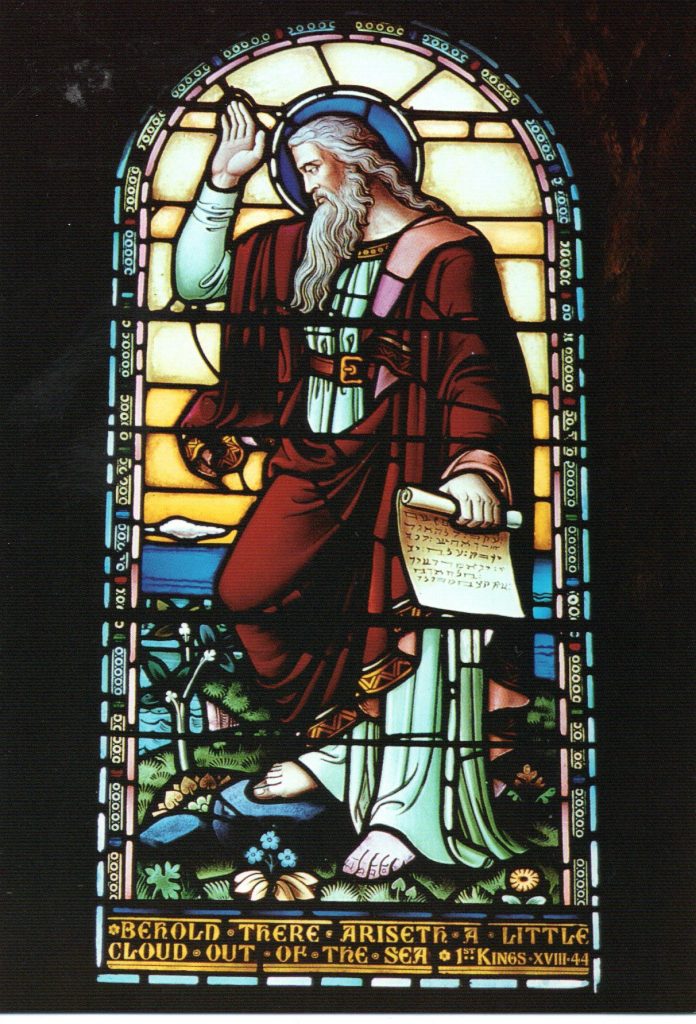
Farming and fishing in the north, on a little group of islands sitting between the Atlantic and the North Sea, Orcadians learned to play close attention to the weather but the story extends well beyond these islands.
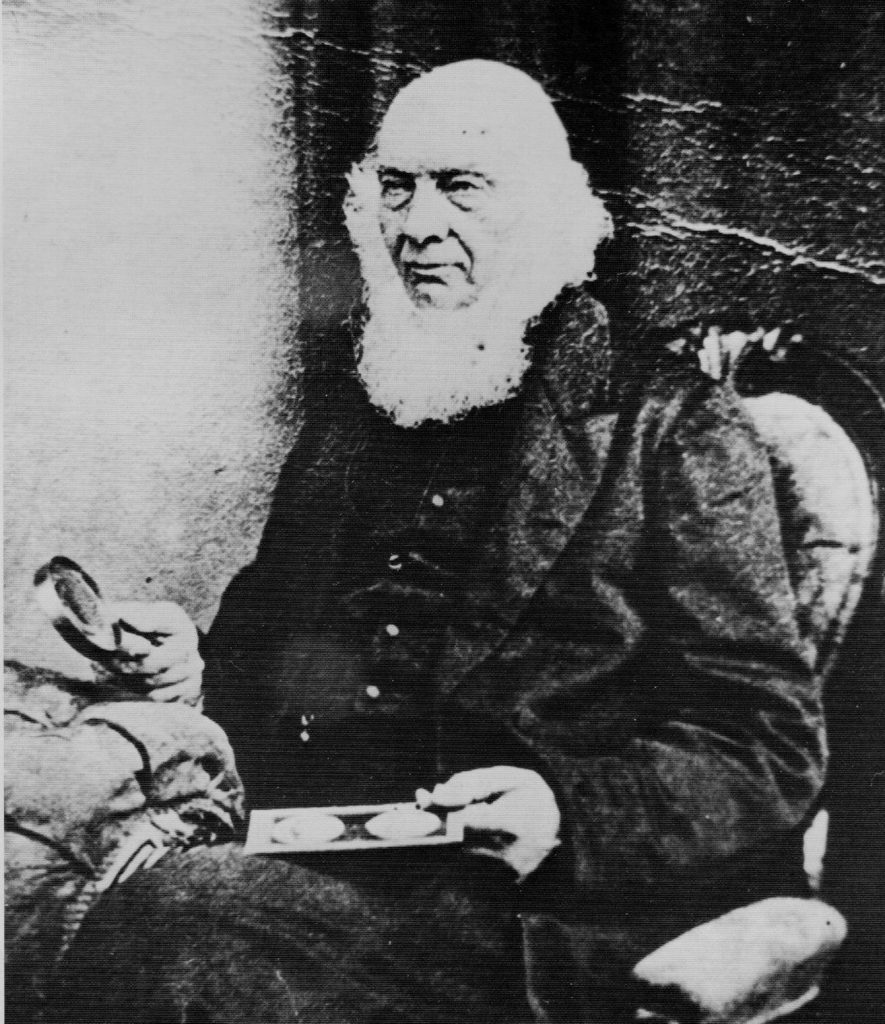
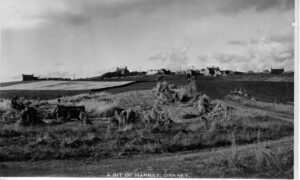
Thanks to the Rev Charles Clouston, Orkney has one of the longest continuous weather records in the country. At the Sandwick Manse, near the Bay of Skaill on Orkney’s west coast, he kept a daily record for 58 years, beginning in 1827. In Scotland, this is second only to Edinburgh. Charles Clouston studied the weather, as well as recording it, and became a recognised expert. He presented a paper on the Climate of Orkney to the British Association for the Advancement of Science in 1861. On 31 December, the Orcadian reported, “The statements were so interesting that Admiral Fitzroy of the Board of Trade offered to print them at the national expense and supply copies gratuitously to men of science.”
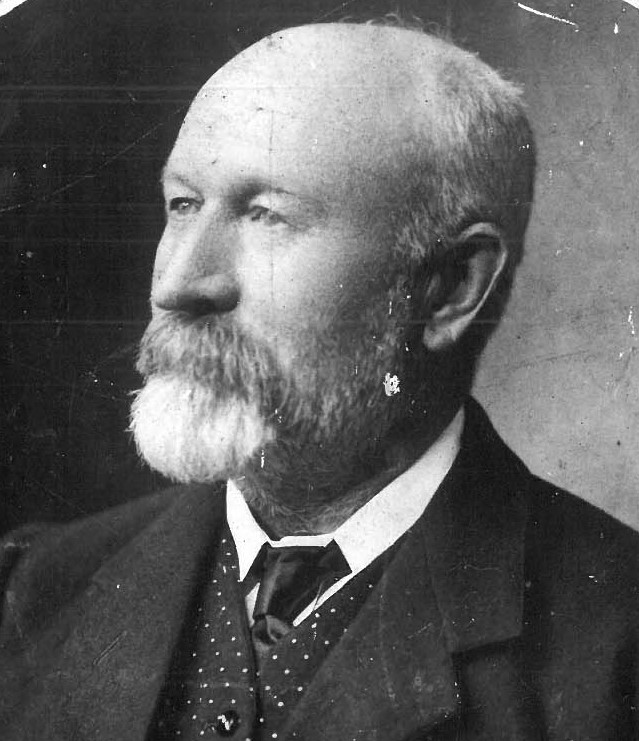
William Fortescue of Swanbister, Orphir, took over in 1885 but left Orkney just five years later, to be a doctor in Kingussie, so Magnus Spence, schoolmaster in Stenness, took the weather station with him when he moved to Deerness in 1891. During WWI, he recorded the weather six times a day and sent the readings to London three times a day. His son Magnus Thorfinn Spence, was Chief Meteorologist for Bomber Command during WWII.
After Magnus Spence’s death in 1919, William Delday, who had been his assistant, took over the Station. He was in turn followed by another Deerness school-master, William J Moar, who was not allowed to continue recording the weather during WWII, presumably because this was now classified information and was taken into the hands of the military. He was allowed to continue to record the rainfall and took the rain gauge with him when he transferred to the Stenness School in 1939.
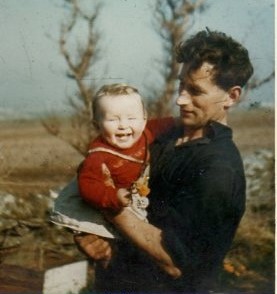
When William Moar died in 1950, his widow asked my father, Peter Leith, who had shown an interest in the rain gauge, whether he would give it a home and continue the recording, which he did. After a few years, the Met Office agreed to his request for more instruments so through the 1960s and 70s he recorded temperature, rainfall, wind speed and direction, sunshine, visibility and evaporation. The hottest temperature he ever recorded was 81o F. For us, a hot summer’s day is in the low 70s F. Once it gets above 20, we start looking for the shade. On the other hand, the coldest it has ever been here is -11 C, 12 F.
After the war, one of the four wartime airfields, HMS Robin, became Orkney’s civilian aerodrome, Grimsetter. It is now Kirkwall Airport and there has been a Met Station on site since 1950. It was automated in 2000.
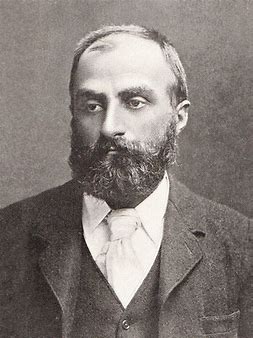
In just seven years, Orkney will have a record of 200 years of weather so there is a very satisfying symmetry to the oldest weather station in Antarctica being on the South Orkney Islands. And the Orkney connections don’t end with the name. Base Orcadas is an Argentinian weather station but it was founded in 1903 by the Scottish National Antarctic Expedition, led by William Speirs Bruce. I was very interested to learn that his grandmother was called Charity Isbister, as that is a distinctively Orcadian surname. I found her in the Orkney records, inheriting a share in Ness Farm, Stromness, from her father Caleb.
Speirs Bruce was the son of a London doctor, Samuel Bruce, but headed back north, to study medicine in Edinburgh. He never graduated, as he got the chance to go to the Antarctic as scientist on a whaling expedition in 1892 and devoted the rest of his life to study of the polar regions. He went on four expeditions to the Arctic, including the Jackson-Harmsworth exploration of the Franz Josef archipelago and an oceanographic survey with Prince Albert of Monaco. In between going to the Arctic, he did the next best thing and went to the top of Ben Nevis, which had snow cover for 215 days of the year.
In the 19th Century, the only way to get weather observations at higher altitudes was to build an observatory up a mountain. Ben Nevis was not only the highest, it was right in the path of weather systems. The Observatory was built and funded by the Scottish Meterological Society, assisted by private donations. In the Ben Nevis Guide Book written a few years after the Observatory opened, the directors of the Observatory were quoted on its aims. “The object sought to be attained was a knowledge of atmospheric changes and disturbances such as would lead to a juster conception of the great movements of the atmosphere and of the weather preceding, accompanying and following these movements… that value of forecasts of the weather of the British Isles would be much enhanced.”
The Observatory was opened in October 1883 by Mrs Cameron Campbell, the owner of the estate which included Ben Nevis. The Aberdeen Evening Express wrote, “The small cannon which was conveyed to the top of the Ben yesterday for the purpose was then fired in honour of the event.”
Three men were stationed in the Observatory, taking observations every hour of the day or night, in often very challenging conditions. When the anenometer froze up the observers measured wind-speed by how far they could lean into it. A few entries from the logbook give a flavour of what they dealt with.
“Rain gauge not found, probably blown over the North Cliff.”
“8.00 One of the cups of the anemometer was gone and could not be found.” “9.00 Another cup gone”
“As soon as Mr Omond went outside the door of the new porch, he was lifted off his feet and blown backwards against Mr Rankin who was knocked over. No observations for two hours.”
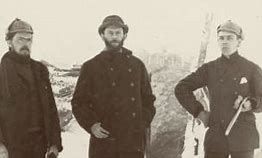
The Mr Omond mentioned there was the first superintendent: RT (Robert Traill) Omond. He was the son of Robert Omond from Kirkwall, who was a very successful doctor in Edinburgh and President of the Royal College of Surgeons of Edinburgh 1859-61, and Mary Traill, daughter of Professor Thomas Stewart Traill, (also from Kirkwall) Professor of Medical Jurisprudence at Edinburgh University and editor of the 8th edition of the Encyclopedia Britannica. https://www.aboutorkney.com/biography/thomas-stewart-traill/
R T Omond studied the Physical Sciences under Professor Peter Guthrie Tait at Edinburgh University and was involved with the Observatory right from its planning stages. Ill health forced him down from the summit after seven years but he remained in overall charge until the Observatory closed in 1909. He was made a Fellow of the Royal Society of Edinburgh in 1884 and became Honorary Secretary of the Scottish Meterological Society in 1905.
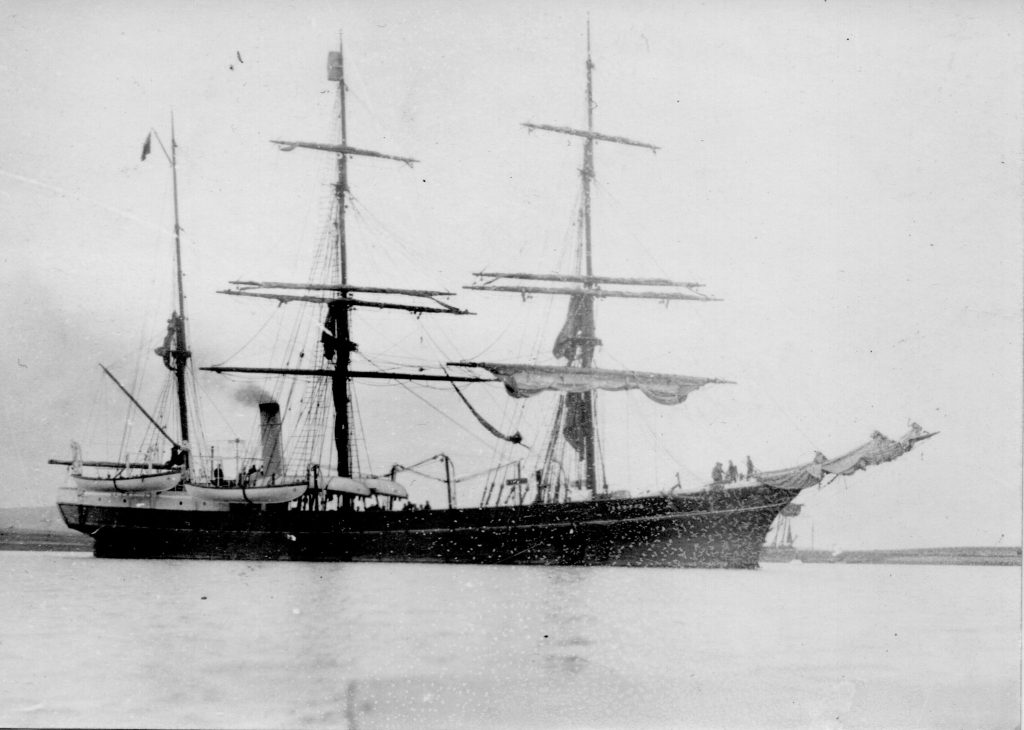
William Speirs Bruce had applied to join Scott’s expedition to the Antarctic. When, despite being one of the most experienced Polar scientists in the country, his application was rejected, he set about raising the funds for an expedition supported by the Royal Scottish Geographical Society. He bought a Norwegian whaling ship, the Hekla, and renamed it the Scotia. It became a whaler again for a few years after the expedition and it was probably then that the picture was taken off her, as the last whaler to call at Stromness.
The Scottish National Antarctic Expedition of 1902-04 is not as famous as those of Scott and Shackleton, probably because nobody died or had to be rescued, but it has been described as one of the most cost-effective and carefully planned scientific expeditions of the age. As well as establishing the weather station, the expedition brought back a large number of botanical, biological, zoological and geological samples. Speirs Bruce established the Scottish Oceanographical Laboratory in Nicolson Street, Edinburgh but WWI ended his hopes of it becoming an institute. The samples were shared between Edinburgh University and the Royal Scottish Museum.
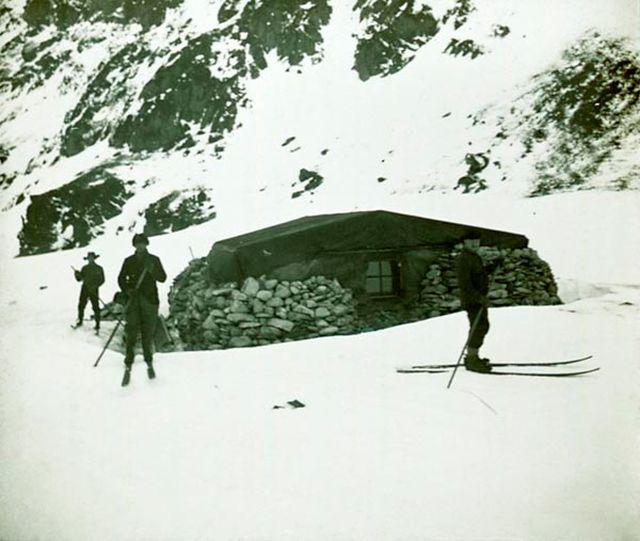
The members of the expedition hauled rocks to add to the wood they had brought with them and built a house for themselves and their scientific instruments. Base Orcadas now stands on the site on Laurie Island but that first building was called Omond House. As well as giving Speirs Bruce a lot of practical and scientific advice. Omond had given a very sizeable donation to the expedition.
When the Scotia arrived back in the Clyde in July 1904, her reception was organised by the Secretary of the Royal Scottish Geographical Society, Ernest Shackleton. The other odd fact that I came across in my research was that William Speirs Bruce was a co-founder of Edinburgh Zoo.
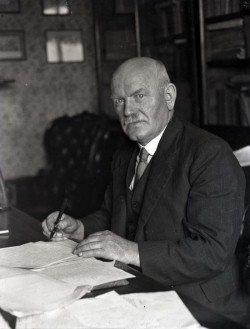
The Ben Nevis Observatory only lasted eighteen years and only had three observers at a time so it is strange that there is still more Orcadian involvement. According to his entry in the Australian Dictionary of Biography, Charles Anderson, from Moa in Stenness, was the Superintendent there after he graduated in 1900. He isn’t mentioned in any of the on-line articles about the Observatory, perhaps because he was there towards the end or perhaps because he quickly realised he wanted to be somewhere warmer and went to work at the Australian Museum in Sydney a year later. He went on to become the Director of the Museum and an expert on Australia’s minerology and palaeontology. https://www.aboutorkney.com/biography/charles-anderson/
The final, slightly tenuous, connection brings the story full circle. C T R Wilson only spent a fortnight on Ben Nevis, in September 1894, but it had a profound effect on him and on the study of physics. The cloud effects he saw there inspired him to invent the Cloud Chamber, which made it possible to study subatomic particles and was one of the most important instruments in the study of particle physics. His invention earned him the Nobel Prize for Physics in 1927. The man who brings this story back round to the beginning is Wilson’s professor at Owens College, Manchester, Rev Charles Clouston’s nephew Balfour Stewart. https://www.aboutorkney.com/biography/balfour-stewart-m-a-ll-d-f-r-s/
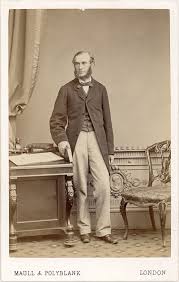
Balfour Stewart was born in Edinburgh of thoroughly Orcadian parentage. His mother was Charles Clouston’s sister Jane and his father was William Stewart of Brugh. He shared his uncle’s interest in meteorology and was Director of Kew Observatory and the first secretary of the Meteorological Committee, later to become the Met Office. In this role, he supervised the establishment of the automated weather stations all around the country in 1867-69.
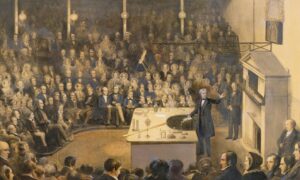
In 1870 Balfour Stewart moved to Manchester to become the first professor of Physics at Owens College, now the University of Manchester. He and his friend James Clerk Maxwell, professor at Aberdeen, were well ahead of their time in making their students do their own experiments. This, then controversial, method was soon vindicated by results, C T R Wilson was not the only student of Stewart’s to be awarded a Nobel Prize. JJ Thomson, the discoverer of the electron, was awarded his in 1906. Balfour Stewart himself was made a Fellow of the Royal Society for his work on heat radiation. The first name in the list of Fellows supporting his nomination was one of the greatest scientists of them all, Michael Faraday.


Do we know where the original weather observations from Sandwick are? Do notebooks or diaries still exist in an Archive somewhere?
They would be immensely valuable for modern-day climate scientists such as myself, especially the measurements from the 1820s, 1830s and 1840s.
Many thanks,
Professor Ed Hawkins, Unviversity of Reading